
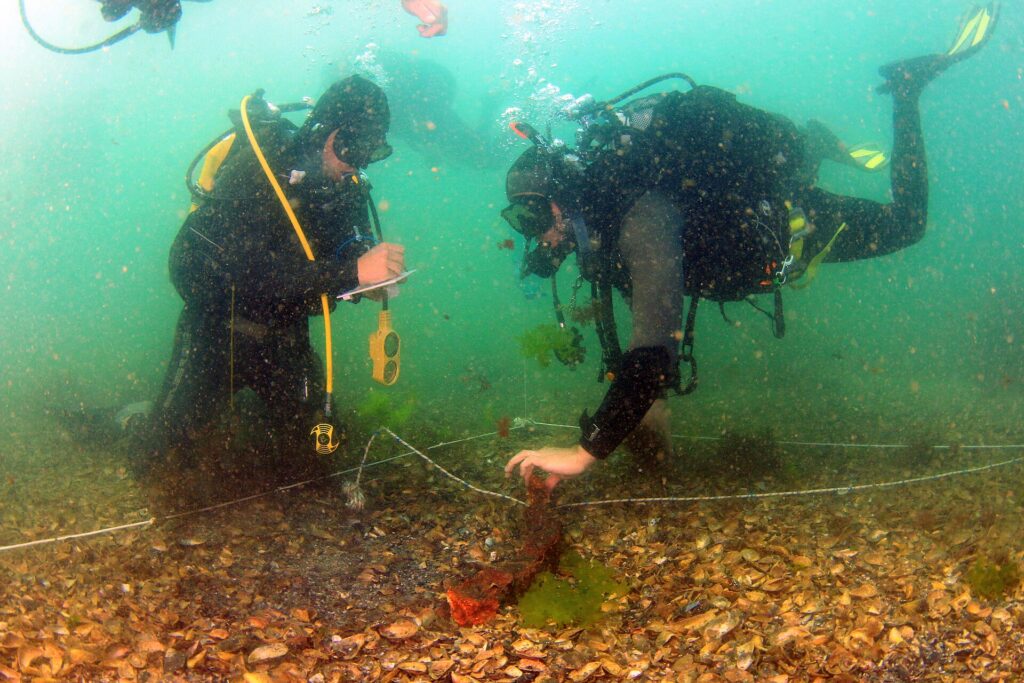
When we talk about the heritage of the Bay of Burgas, we usually think of fishing villages, boats, nets, old words and the recipes handed down in families. Part of this story, however, remains invisible, beneath the surface of the sea. Underwater archaeological sites, traces of seafaring, old port connections and objects linked to maritime livelihoods are part of the same memory.
On 1 October 2026 Burgas hosts a round table on the potential of the underwater cultural heritage of the Black Sea. The forum brings together representatives of the Black Sea countries, scientific and cultural institutions, and organisations working to research, protect and present this heritage to the public. The topics under discussion include marine geophysical surveys, underwater archaeology, digital technologies, professional training, knowledge exchange and future joint projects.
For FLAG Burgas–Kameno this topic matters for three reasons.
First, it connects culture with living fishing communities. Fishers know the coast, the seasons, the old places and the stories that are not always found in the archives. Their accounts can complement scientific knowledge without replacing professional archaeological research. In this way fishing families become participants in safeguarding local memory, rather than merely the subject of an outside description.
Second, underwater heritage makes for powerful educational content. Students can learn about history, the sea, ecology, technology and responsible citizenship all at once. Photogrammetry, 3D models and virtual exhibitions make it possible to show inaccessible sites without any risk to their condition. Fishers’ stories, maps and museum objects can be included in mobile exhibitions and learning workshops in Burgas and Kameno.
Third, heritage can support sustainable tourism and additional local income. This does not mean uncontrolled access to archaeological sites. It means well-prepared routes, museum and digital experiences, storytellers from the local community, visits to fishers’ workshops and partnerships with licensed tour operators. When cultural content is presented well and lawfully, it extends visitors’ stays and directs spending towards local services.
FLAG Burgas–Kameno proposes developing a concept titled “Under the Water, Along the Shore: the Heritage of the Bay of Burgas”. It could include oral histories from fishers, scientific and archival research, a digital map, a mobile exhibition, student workshops and training for local storytellers. Implementation will require a cultural or scientific organisation, museum specialists, the Institute for Underwater Heritage, municipalities, schools and representatives of the fishing community.
Funding can be sought through the National Culture Fund, future cross-border and transnational programmes, Creative Europe and European instruments for ocean literacy and the blue economy. For each programme, the eligible lead applicant, the partners, the budget, the own contribution and the required permits must be checked separately.
The most important step now is partnership. A single local organisation cannot, and should not, carry out archaeological, museum, educational and tourism activities on its own. But it can connect the right people, ensure that the voice of the fishing communities is heard and turn separate ideas into a shared project.
The Black Sea is not just a natural resource or a transport corridor. It is a space of memory, work and culture. If we approach it responsibly, the heritage beneath the water can help new generations understand the sea, and help local communities create new educational and economic opportunities.